
Egyptian Goslings: Cute or Terrifying?
FIELD NOTE
January 3, 2026—Kerrville, Texas
I decided to try my hand at video. Of course my favorite lens is the Sigma 150-600, so it’s big and heavy. My tripod is light, so it’s easy to pack up and carry. But I quickly figured out it’s too light to stabilize the camera and long lens well enough. I need something that works on-the-go and off-trail. But that’s a problem for another day.
What I did find was a cute little family of Egyptian geese, including a mom and pop with two goslings that were, I’d guess, an age equivalent to our awkward preteens.
Here’s the thing. I looked at pictures of the goslings when they’re first born. They are adorable. When they become juveniles, it’s a toss-up. Cute or terrifying? Both?
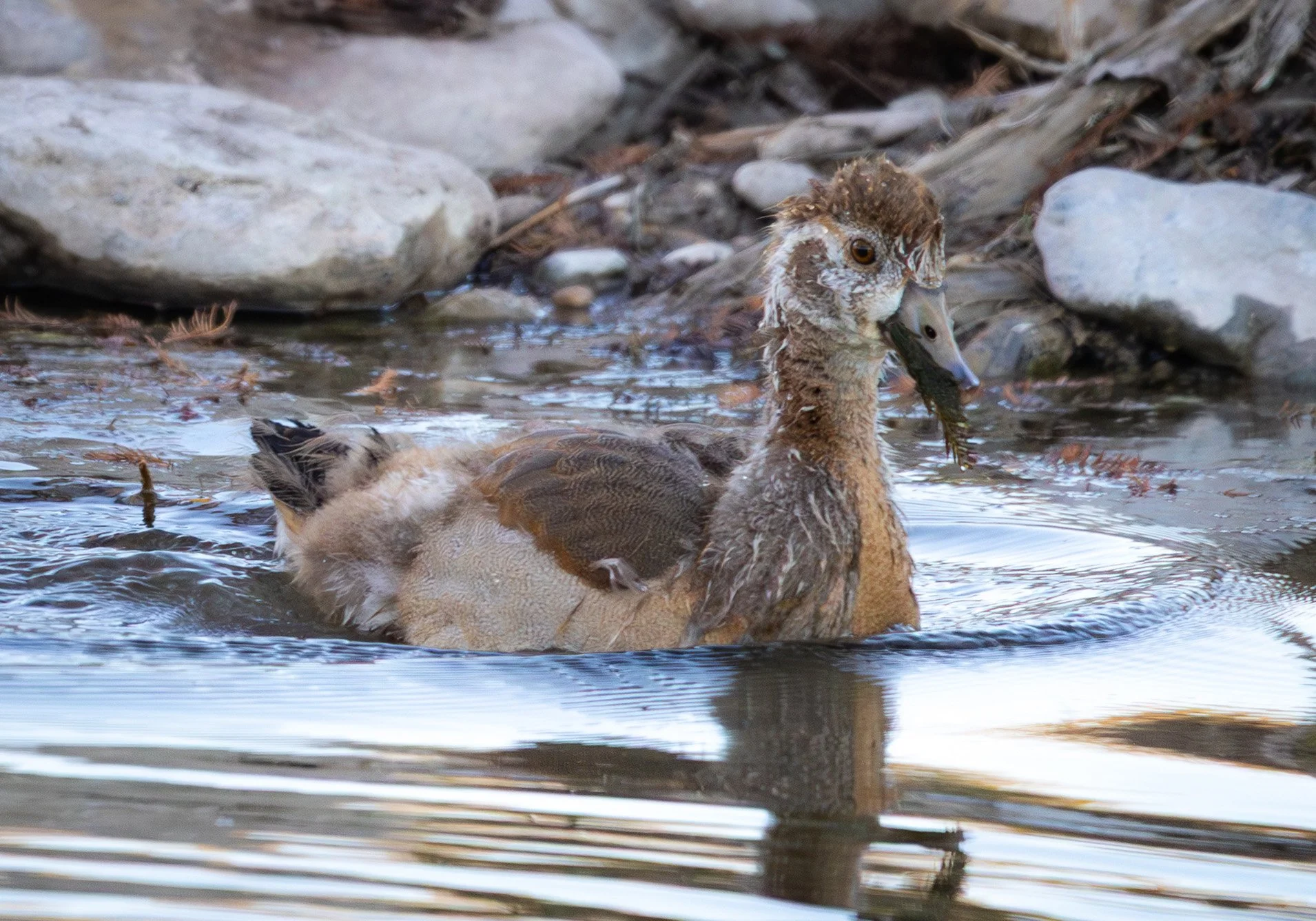
One of the two goslings, enjoying a mouthful of river vegetation.
In any case, I managed some halfway decent video and a few photos. The Egyptian Geese were interesting. Again, when I first moved to the area, I was struck by yet another bizarre bird I had never seen. The red eyes, the strange hitch in their walk … er waddle? What do ducks do? I had seen some goslings from afar but not up close until today.
When the July 4 flood hit, there was an eerie period of silence after. Because two storms converged, birds (and possibly other wildlife) may not have recognized the usual internal warning system that alerts them to dangerous weather. There were many birds, deer, fish, turtles, and other wildlife found after the waters receded.
I still get upset thinking about wandering Louise Hays Park the night of July 3 and enjoying so much the juvenile yellow-crowned night heron walking through the grass, the squirrels galavanting all over, the adult yellow-crowned night heron perched beautifully on a bowed branch in the smaller river tributary, the ducks that frequent the park, and large gray goose, and of course, the Egyptian geese that fly overhead as the sun is setting and yell at anyone near them on the ground.
I don’t know which of the critters didn’t make it but here’s what I do know: the Egyptian geese are hardy. They’re the first wildlife I began to see, not only occasionally but en-mass. I was out constantly, photographing the aftermath for The Lead’s coverage, and within a few weeks, I saw them frequently.
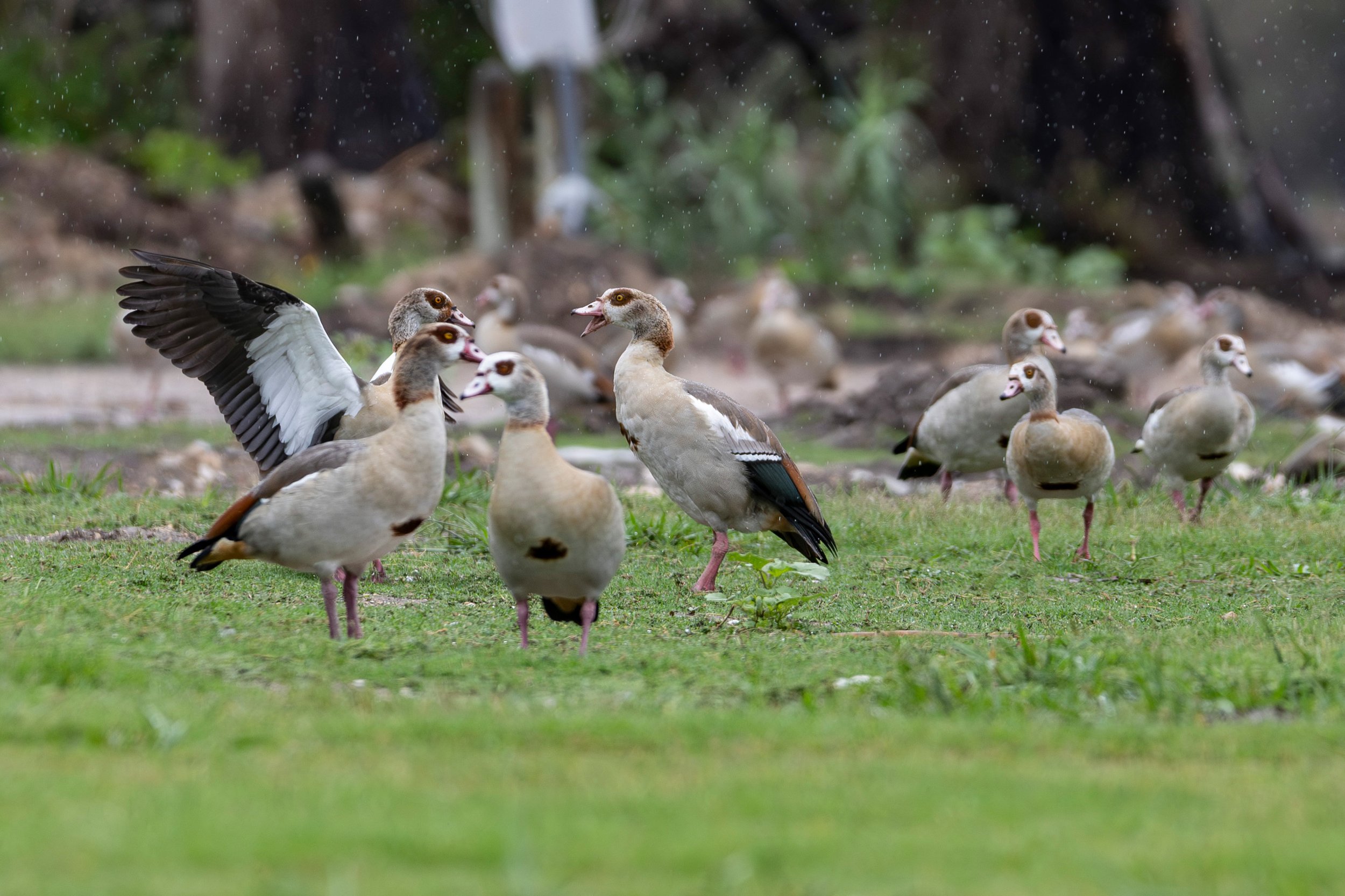
Egyptian geese get rowdy in the rain at Flat Rock Park in Kerrville on September 7, 2025.
They aren’t native to the area and as they’re highly territorial, some have expressed concern that they push other native bird species out. While I don’t usually see them mixed with other goose or duck populations, I haven’t ever seen any aggressiveness to other breeds. Only among themselves (see the above photo). They seem to like other species. I often see them playing with deer, especially the young ones.
Native to Africa, Egyptian geese were brought to the U.S. in the 1960s for ornamental collections. They were popular in zoos and aviaries, but the wily escape artists eventually managed to establish wild populations in Florida, Texas, and California. They’ve been spotted in other areas as well.
Here’s the Audubon categorization information.
Classification: Alophochen aegyptiaca
Category: Duck-like birds
Habitat: Freshwater wetlands, lakes, ponds, and rivers. Urban & suburban habitats.
Behavior: Direct flight, swimming, walking
While their red-eyed stare might be a little disturbing, their coloring along the wings is absolutely lovely.
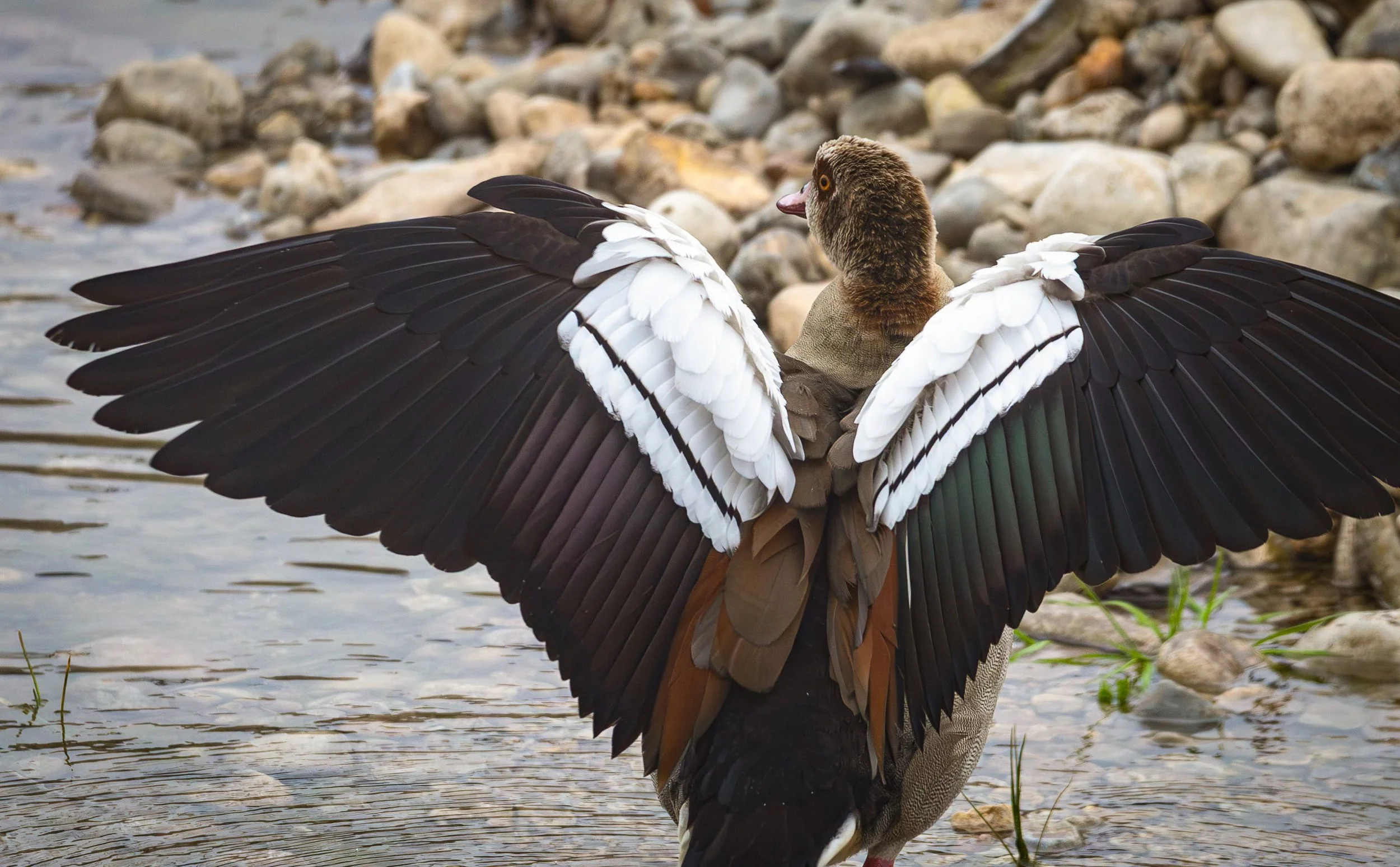
Taken by the Louise Hays dam on Saturday, January 24, 2026 during our big freeze. While I turned into a popsicle, the hardy Egyptian geese enjoyed the brisk weather.
