
The road to today’s small, brushy cedars
More than a century of clearing has stunted the once awe-inspiring Ashe juniper
FIELD NOTE
January 1, 2026—Kerrville, Texas
I’ve come to the conclusion that mountain cedars—Ashe juniper—get a bad rap. And I say this while strung out on allergy meds that aren’t working to combat cedar fever. I grew up spending summers on my grandparent’s Liberty Hill and vividly remember how much work it was to continually cut and burn the cedars that grew like weeds. They kept longhorn cattle and other than the cedars, had grassy fields with scattered oak trees and a lovely larger grove of oaks.
The general impression I had was that cedars were a scourge that should be eradicated. I’ve heard some say they’re invasive and others say they spread pests and fungi that destroy oaks and other tree species that are much more appreciated.
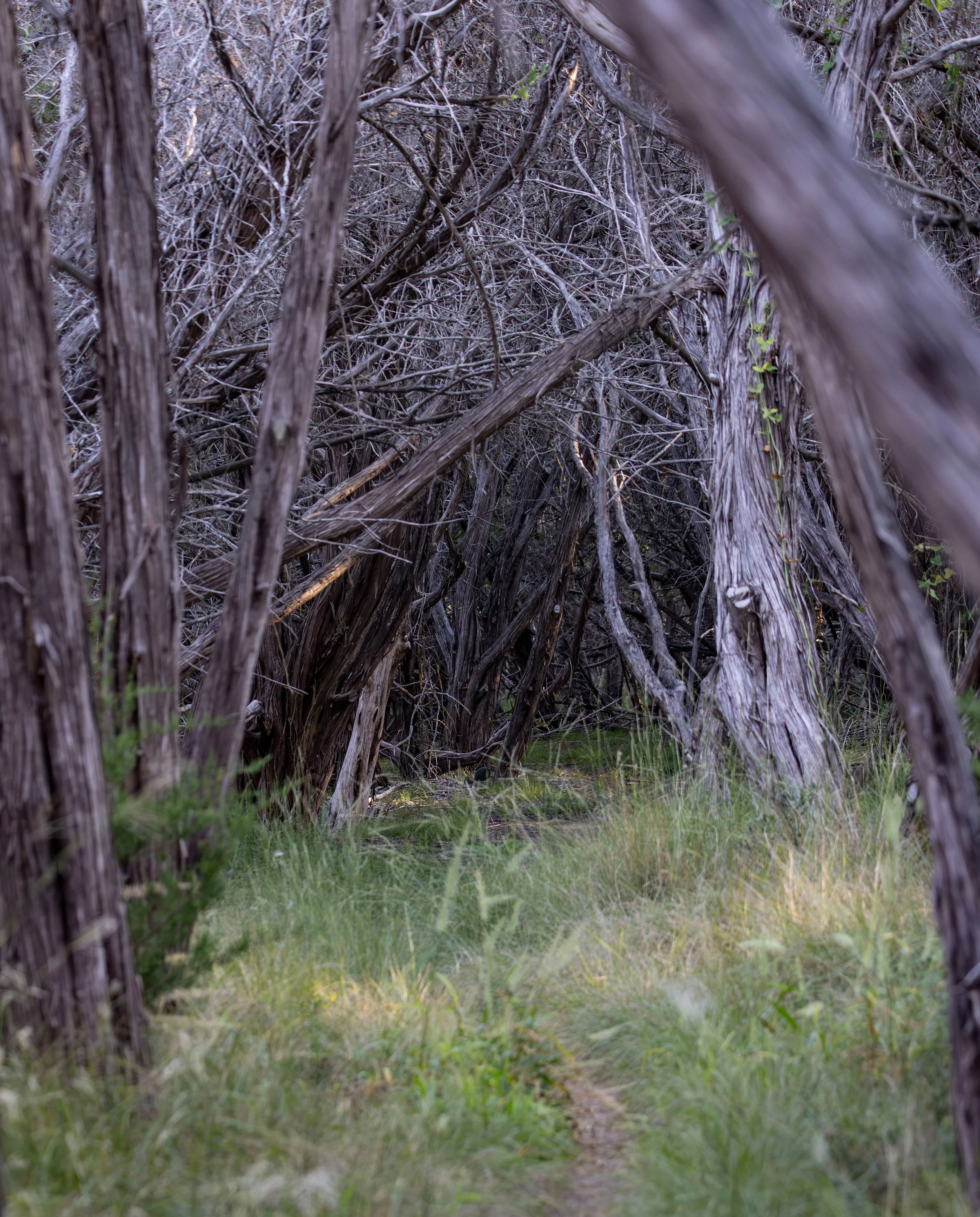
A trail through the cedars in Kerrville-Schreiner Park.
A different perspective
I began realizing cedars have some redeeming qualities when researching Kerr County’s karst terrain following the July 4 flood. I had tapped into a great group of Hill Country experts who specialized in riparian management, geology, hydrology, biology, and range management. Former City of Austin Hydrogeologist Nico Hauwert was part of the group and along with his geohydrology expertise, he shared a Southwestern Historical Quarterly article about the 1921 San Antonio flood.
That article was the first I learned of William Willard Ashe, the North Carolina botanist and forester with the U.S. Forest Service who gave the Ashe juniper its name. The article detailed Ashe’s response to the flood, which he witnessed firsthand while visiting San Antonio.
In articles published in the San Antonio Express and Austin American Statesman, he argued that dams alone would not solve flood problems and that infrastructure must be combined with management of watershed areas to reverse effects of overgrazing and deforestation that worsen flash flooding. The surprising part of his watershed management recommendations?
The mountain cedars that would take his name were a valuable asset in watershed management and flood mitigation.
Ashe’s warnings fell on deaf ears. That flood led to the construction of the Olmos Dam and later, the San Antonio River Walk that now serves as flood water control and tourist attraction.
Ashe had been studying the mountain cedars in the Arkansas Ozarks and since he was the first to collect and formally note the species, the naming designation was given to honor him. Even then, junipers were more prevalent in Central Texas than the Arkansas Ozarks and while their spread into grasslands had already begun, he also noted their value in soil health and flood mitigation.
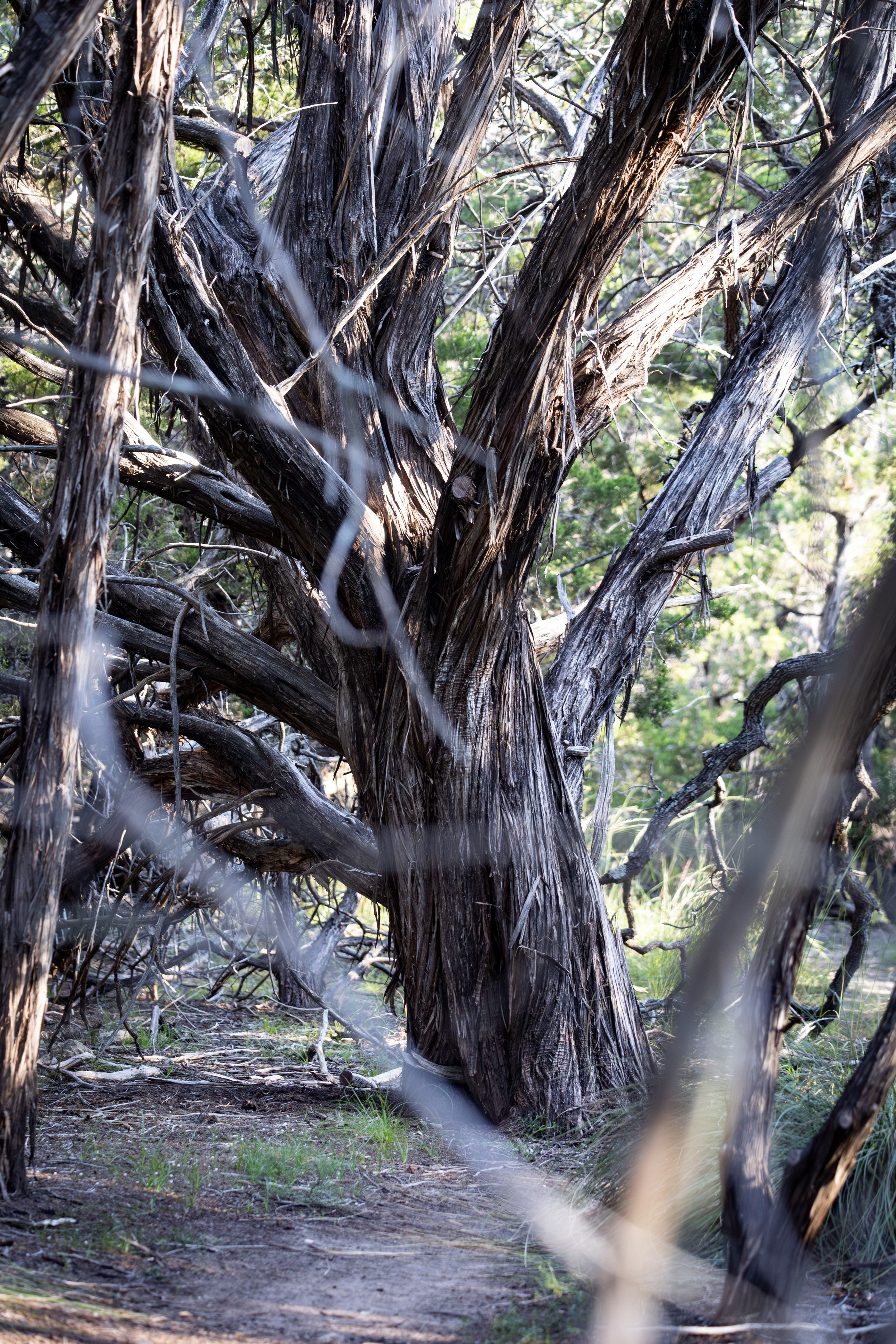
A mature Ashe juniper in Kerrville-Schreiner Park.
The Ashe juniper a century ago
The junipers Ashe studied and categorized looked pretty different from most we see today, which resemble scrub brush in many cases.
The trees that preceded European settlement in the 19th century were larger and much less brushy. Left to grow over hundreds of years, they had large, tall trunks which branches that created large, tall canopies.
Historical narratives describe the very large old growth cedar trees as well over 60 feet tall with wide trunks. Left undisturbed for centuries, the growth patterns also differed with larger patches of older cedars, usually in mixed oak/juniper woodlands located in canyonlands, breaks and areas characterized by rough limestone terrain.
Of course, some stands of the very large, old trees described in these narratives still exist but most modern surveys and tree records show that today, even the largest, oldest trees in the region only reach heights of 40-45 feet. Average junipers resemble large shrubs or small trees, standing at about 19-30 feet tall.
It’s well-known that extensive cutting of junipers began during the 19th century as settlers cleared juniper for fuel, fencing, mining, building materials and to open land for pastures or crops, changing the composition of the land extensively. Large, old trees in particular.
Pre-settlement, there were also periodic natural fires that limited the spread of junipers into open grasslands—much of the region’s historic ecosystem. This pattern of natural burns promoted a mosaic of grasslands and wooded patches.
After settlement, practices of fire suppression and overgrazing enabled juniper seedlings to establish more widely into prairie lands and other areas, leading to overpopulation. The massive growth led to extensive efforts to eradicate it, and finally, this cycle of spread, new growth, and removal created the smaller, brushy cedars we see today.
These younger stands haven’t had time to develop into maturity and, as canopy growth rates can vary widely depending on site conditions and disturbance history, most present-day juniper stands have regenerated repeatedly following settlement clearance or fire suppression. Ultimately, Ashe junipers of today tend to be lower and smaller in size than the old-growth trees that survived pre-settlement conditions.
While the wide-scale spread of junipers creates a lot of problems, historical mismanagement of lands ultimately created the problem.
There are some larger Ashe junipers in the area. If you visit Kerrville-Schreiner Park and hike or bike the trails, you’ll find some mature trees, their large graceful trunks incredibly different from their younger, smaller cousins.
As for the comments that the species is invasive, pollen evidence dates the juniper back to the Ice Age. It’s definitely native to the area. The proliferation and placement simply changed due to human intervention.
As we move forward with flood recovery plans, floodplain management, and reseeding and regrowth efforts, perhaps some thoughtful planning can preserve the Ashe juniper in locations that will benefit the soil and surrounding vegetation. It won’t happen overnight but in a few generations, more could make a return to their previous glory days.
