
A changed landscape
FIELD NOTE
January 29, 2026—Kerrville, Texas
Usually I focus on the wildlife subject when I’m shooting photos along the river, minimizing the flood damage that would be seen in a wider view. But this little egret, happily hunting in the small pools of water among the scarred landscape that surrounds the river, made me rethink things. Maybe it’s important to occasionally share the big picture too.
The July 4 flood vastly changed our landscape in Kerr County. When I first moved to Kerrville, one of my favorite things was seeing that river running right through the middle of town. I love the miles of river trails and from day one, have walked them nearly every day.
Yesterday as I wandered by the river, I was struck by a great egret fishing in a pool of stagnant water. Branches, debris, and tree stumps from that catastrophic day surrounded the egret, which was on the small side.
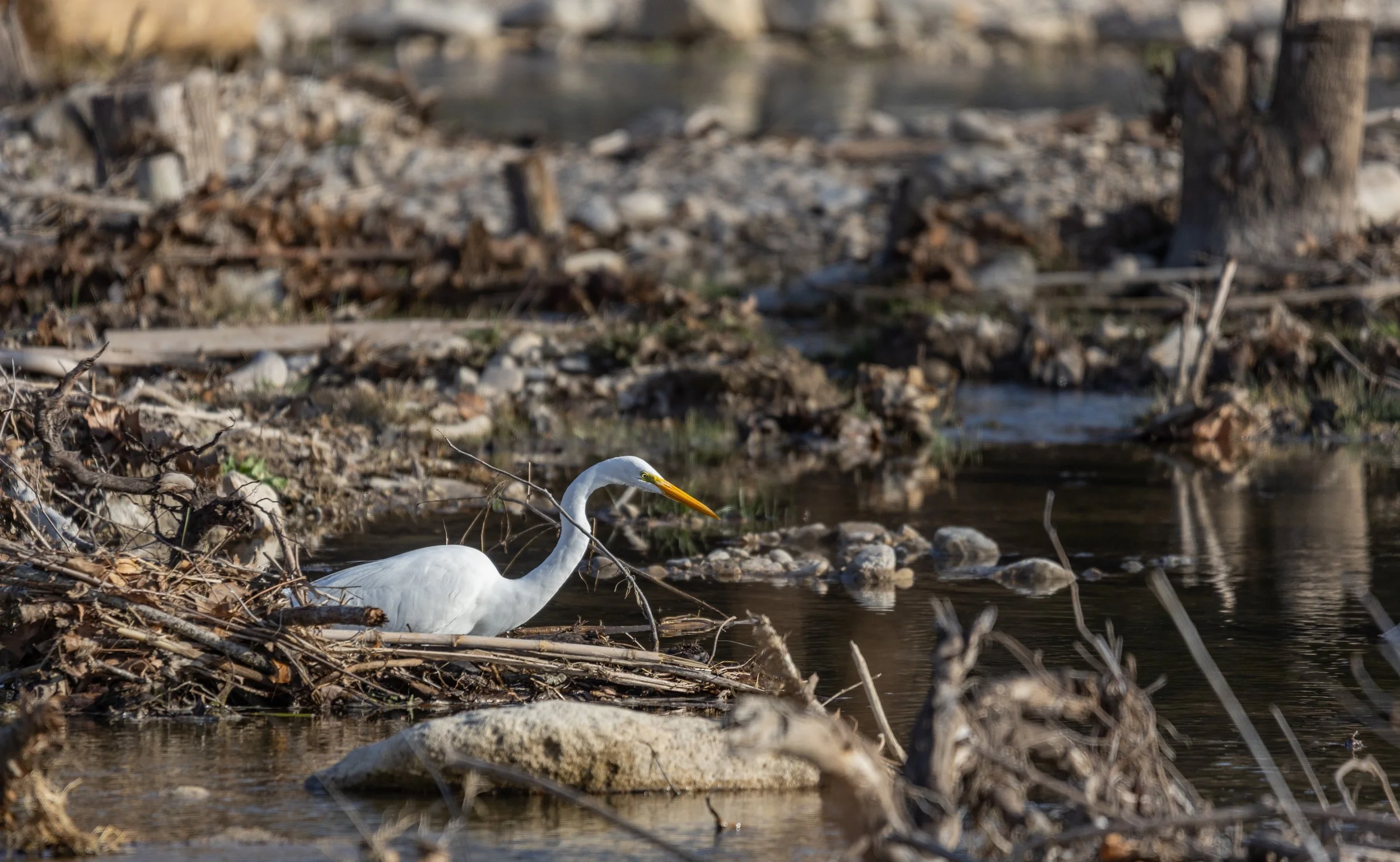
A Great Egret searches for prey in a pool of water surrounded by the scars of the July 4 flood.
The debris is a good thing. Woody debris will support the health of the soil and regrowth of trees and vegetation over time. But this area and others for miles in both directions are also vivid reminders of the devastation.
The egret was just upriver from the Francisco Lemos Bridge, between the Dietert Center trailhead and Riverside Nature Center. This area, once heavily wooded, is now a vast stretch of open space. Along the Guadalupe street side, it’s primarily a wide swath of whitewashed river rock. On the Thompson Drive side, there are a few cypress trees and small pools of water around the new spot where the river splits.
Usually, when I’m photographing the critters, I share images like the one below.
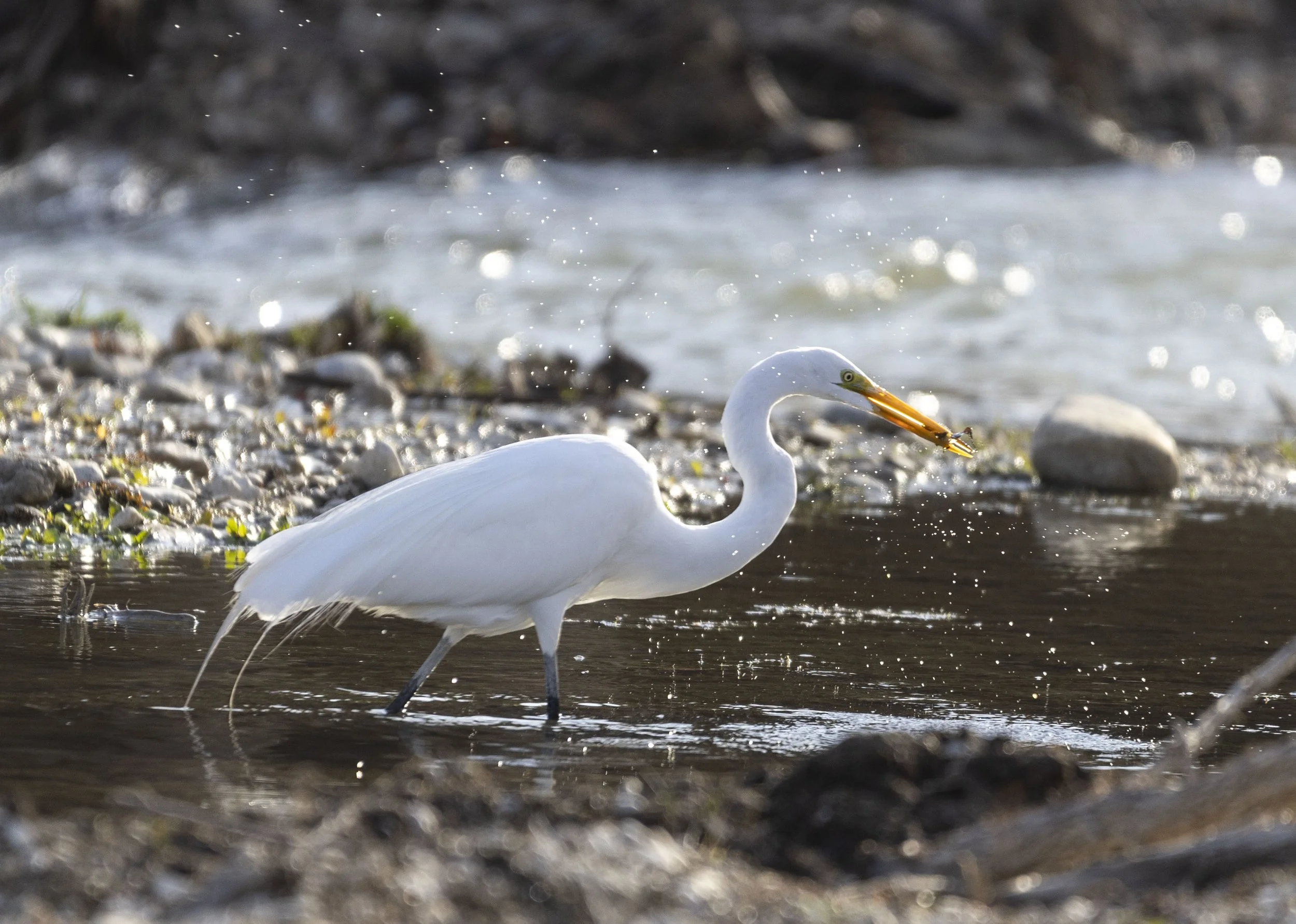
The egret enjoying a crayfish catch, which he (or she) played with for a bit, tossing it, shaking it, and looking at it, before finally gobbling it down.
I don’t meant to be dishonest by zooming in or cropping out evidence of the more extensive damage. My intent has been to get close and share where I can see wildlife returning and making changes in small ways, reestablishing or creating new habitats. It helps me to think about how resilient nature is and how these activities will accumulate over time. I figure others might feel the same.
The initial damage was terrible. My images of the day and weeks that followed are in The Kerr County Lead coverage. I was happy to get back to shooting my critters again, even though initially, walking the river felt haunted and hard. It strangely helped too.
While I haven’t shared them, I’ve continued documenting the scenes along the river, for archival purposes and to record progress.
That little egret, enjoying a warm afternoon of hunting the pools and gingerly stepping through debris, has stayed with me. I think, at least occasionally, I should share the “zoomed out” image too. The big picture also matters, especially as we think about ways to support the return of a healthy river ecosystem, home to this little one and so many others.
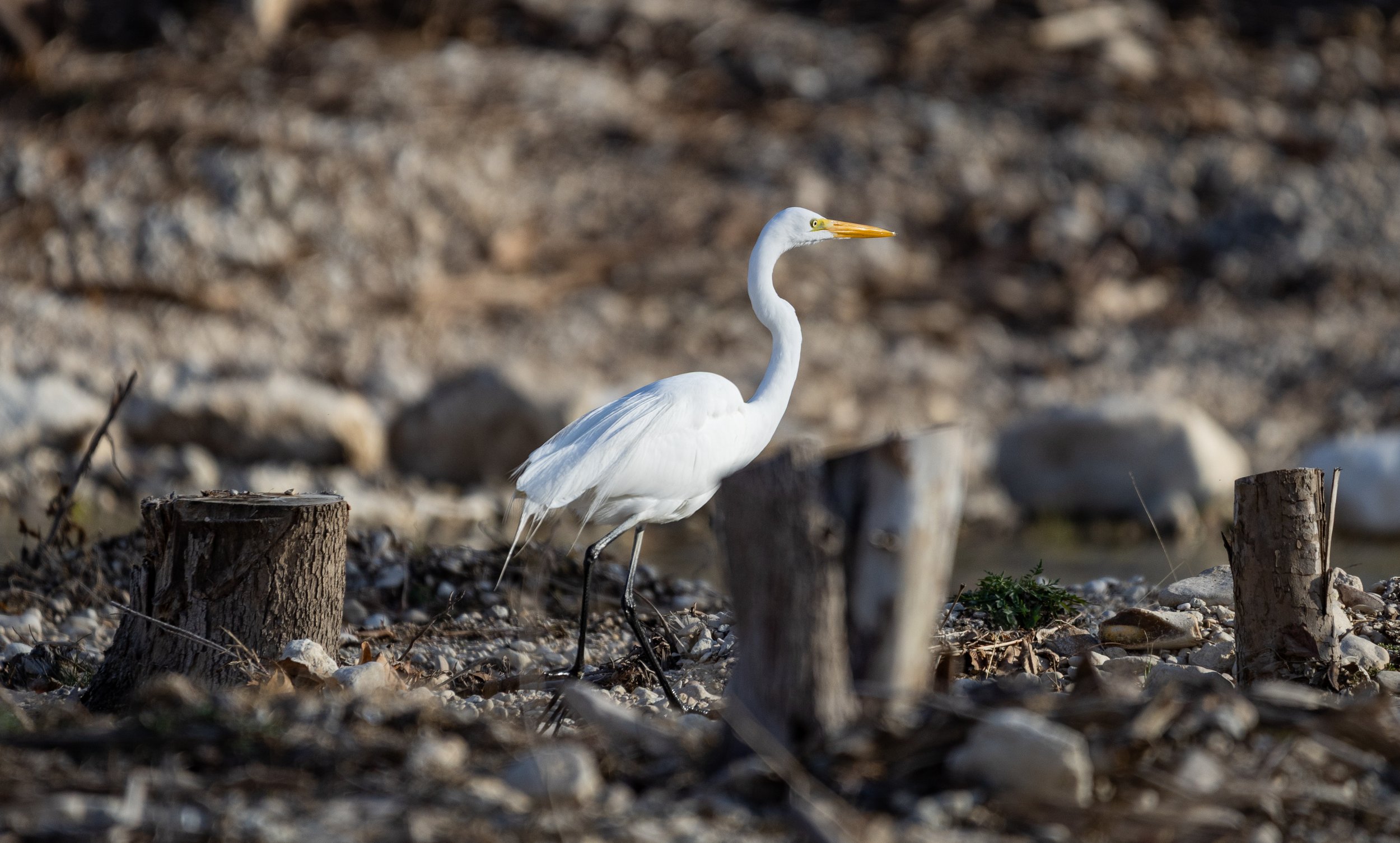
The egret walks among the tree stumps and debris left behind in an area that was once a heavily wooded area of bald cypress, elm, and other trees that canopied the Guadalupe River.
