
A Great Horned Owl Romance
FIELD NOTES
February 6, 2026—Kerrville, Texas
I love owls. I’m a cat person and for some reason, they’ve always reminded me of cats. Maybe it’s the nocturnal lifestyle or the aura of murderous intent that’s packaged in a cute furry (or feathery) raptor body. It’s probably the unblinking stare. In any case, they’re a favorite.
I’ve spotted a few Great Horned Owls in the area, usually around twilight as I’m driving. But there is one that nests near one of the trailheads in Kerrville and I occasionally visit to say hello. On Thursday, I popped in at about 4:30 p.m., way before the usual wake-up time for nocturnal critters. I planned to hike about and then look for my owl on the return trip to my car. Much to my surprise, I immediately spotted not one but two. My owl buddy has a new friend.
She was a sleepy girl, adorably nestled under a tree branch.
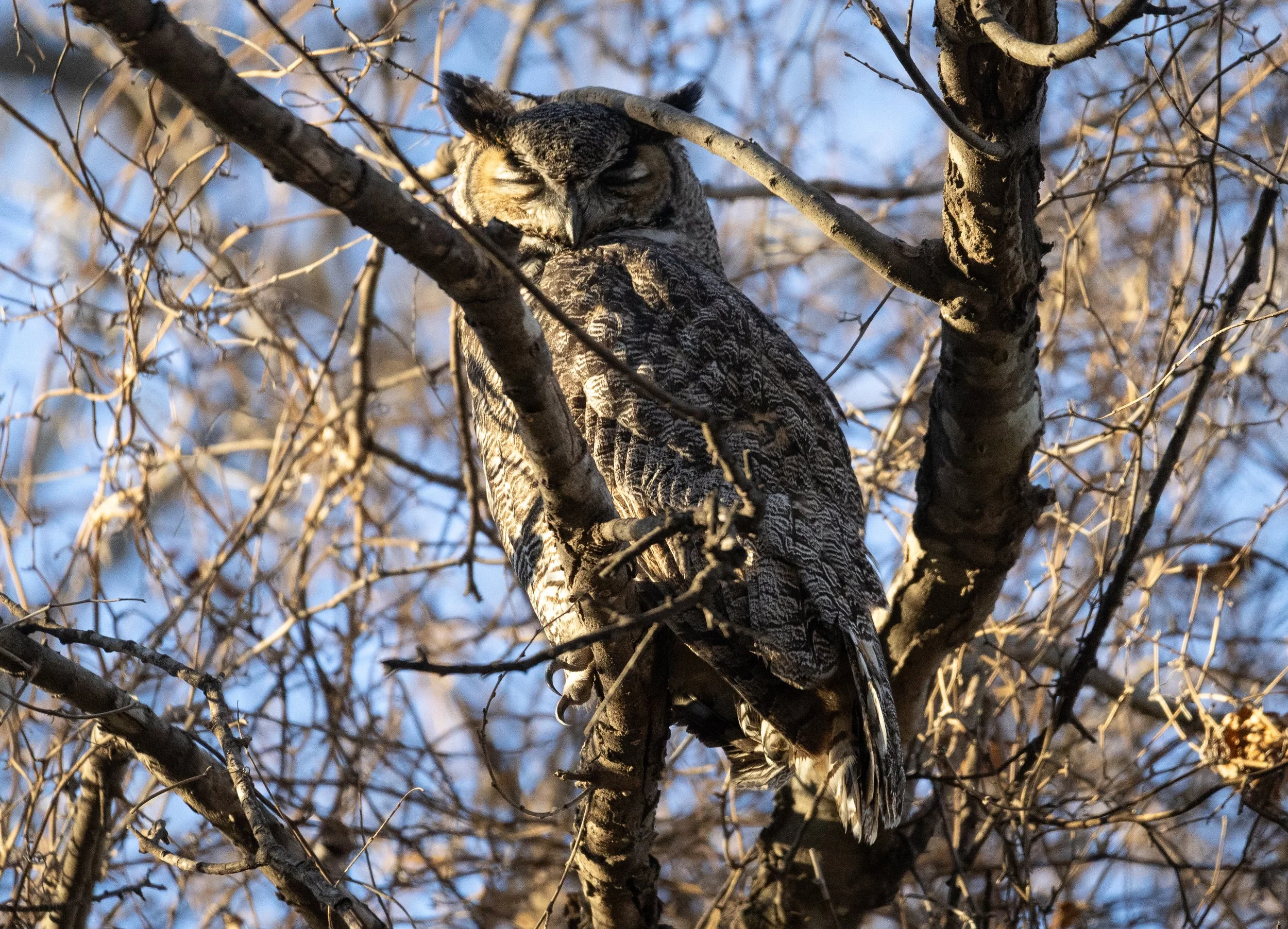
Adorbs.
Owls are definitely easier to see in the sun, so I spotted her quickly. In the shade, they’re expert-level camouflage. Usually it’s the movement that catches my eye, sometimes just the silhouette. The other owl was in the shade but stretching and well, evacuating some waste, so the movement gave him away.
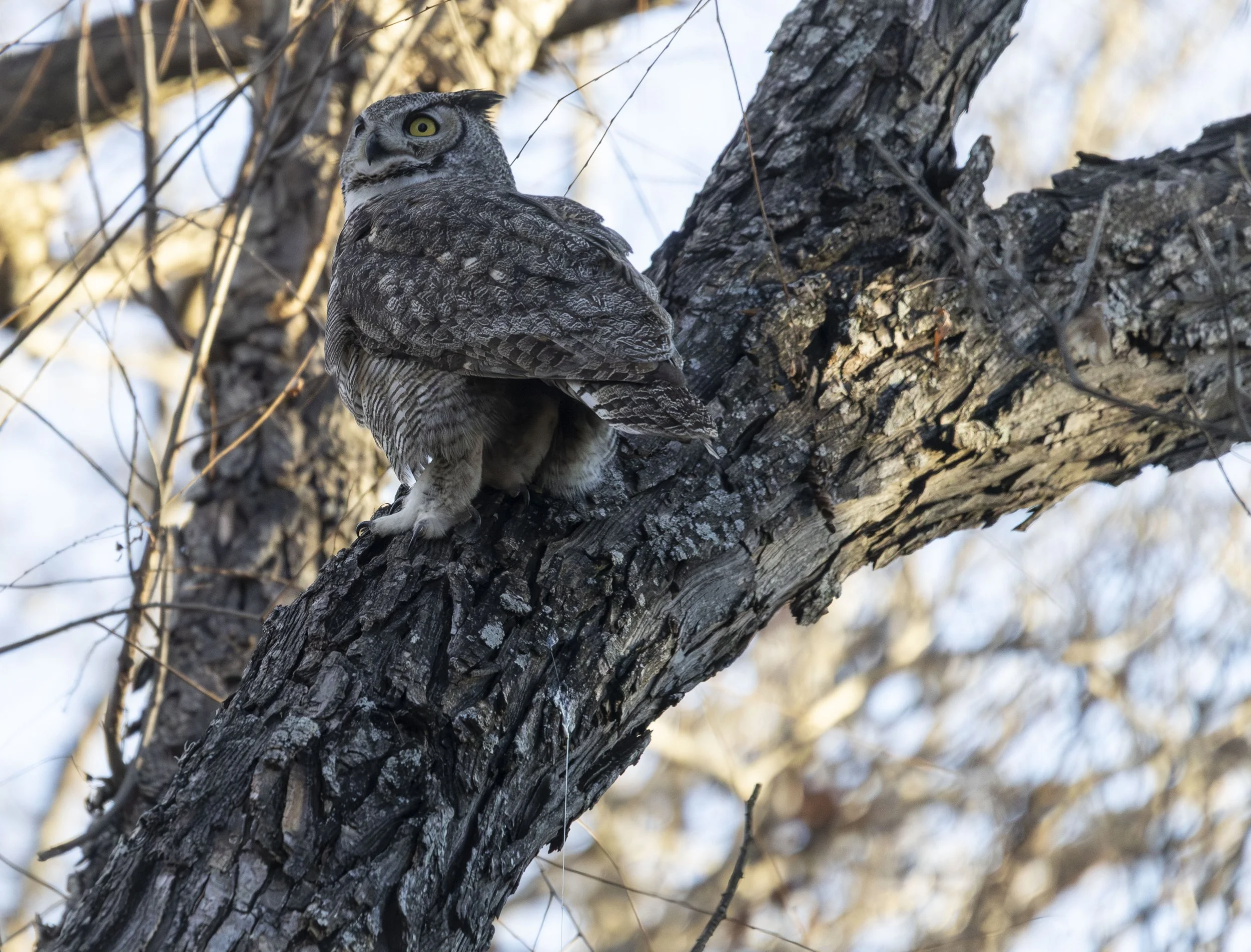
Everyone poops, even the Great Horned Owl.
Someone told me a while back that owls are often in pairs. From that point on, I’ve always scanned for a partner. And it’s true, at least during breeding season. Around here, that’s from December to late July, with peak season from January to March. Owls are early birds, sometimes sitting on eggs by late January.
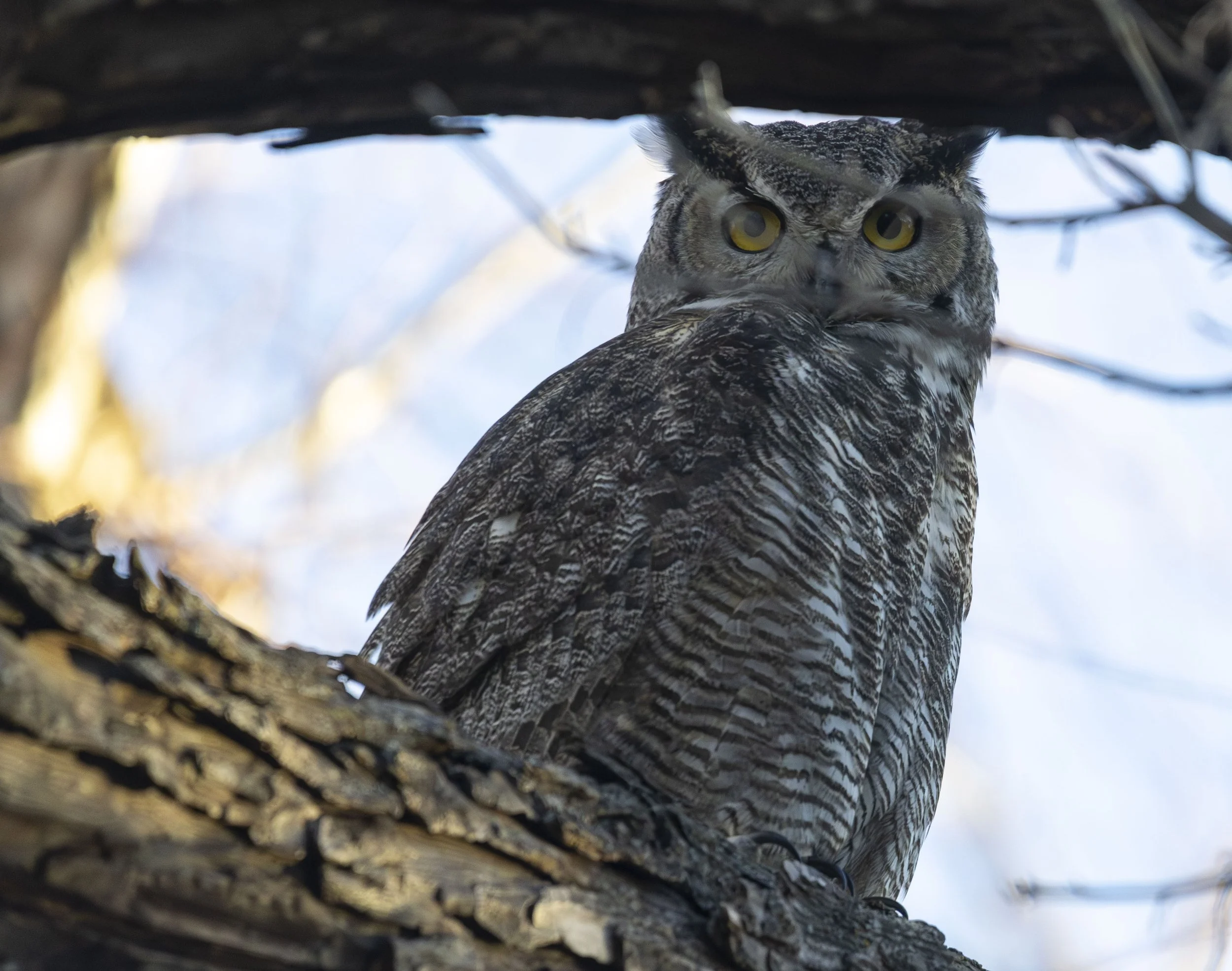
A more dignified photo.
Why so early? There’s a good reason. Their young require an extended development period, and early nesting ensures owlets fledge in spring when prey is abundant. By the time summer heat peaks, juvenile owls are already hunting independently.
Usually, courtship involves vocal exchanges, lots of deep hooting calls. The male's call is lower and typically consists of five hoots; the female responds with a higher-pitched six to eight hoots. These nocturnal serenades strengthen pair bonds and establish territory boundaries.
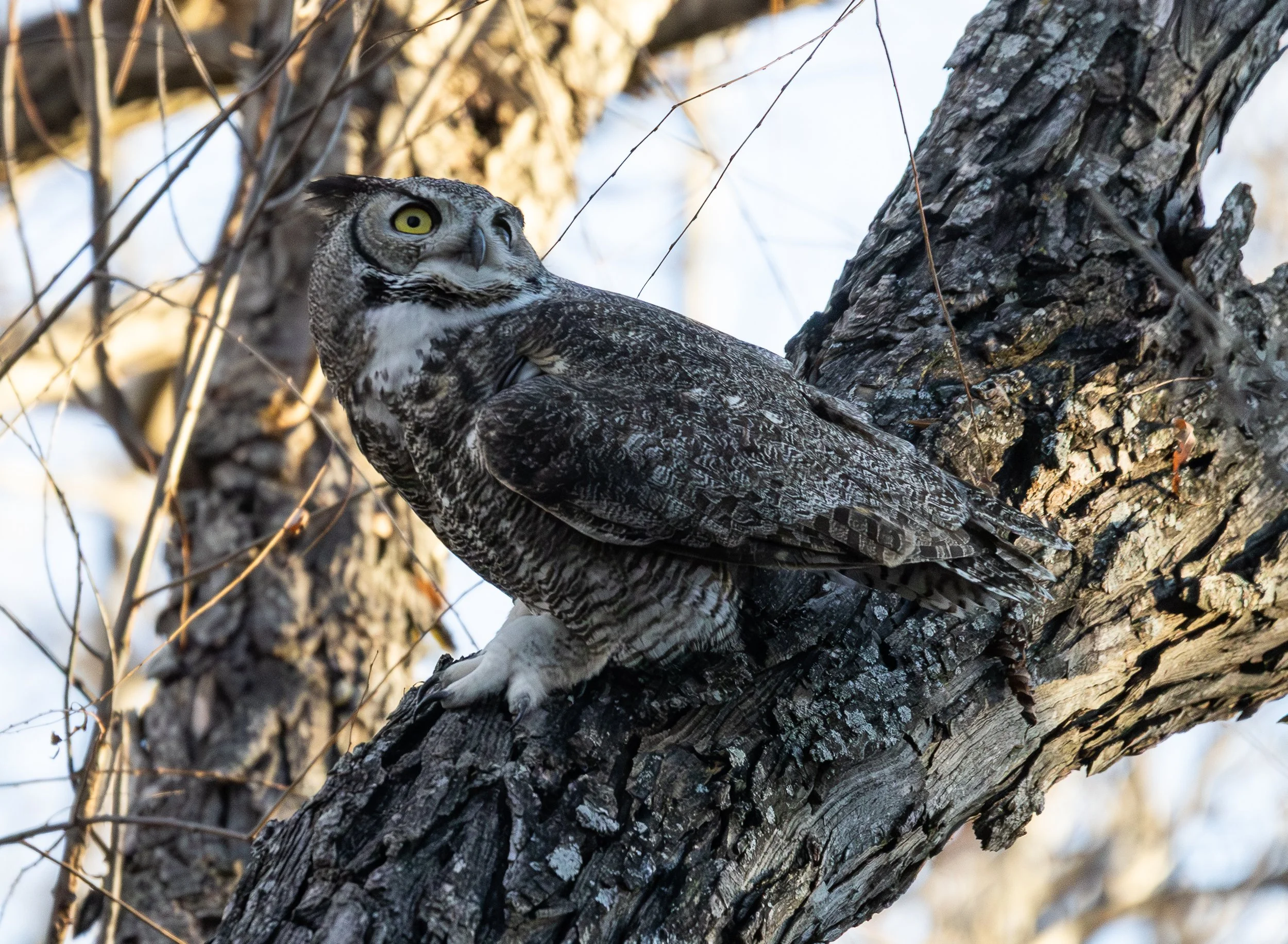
For some reason, I’m assuming this is the male but I can’t confirm.
Owl pairs also engage in mutual bowing, bill stroking, and preening sessions. Males present food offerings to females, demonstrating their hunting prowess and suitability as a mate. A co-parent and provider. Nice. Like the red-shoulder hawks and many other birds, great horned owls reproduce through cloacal contact.
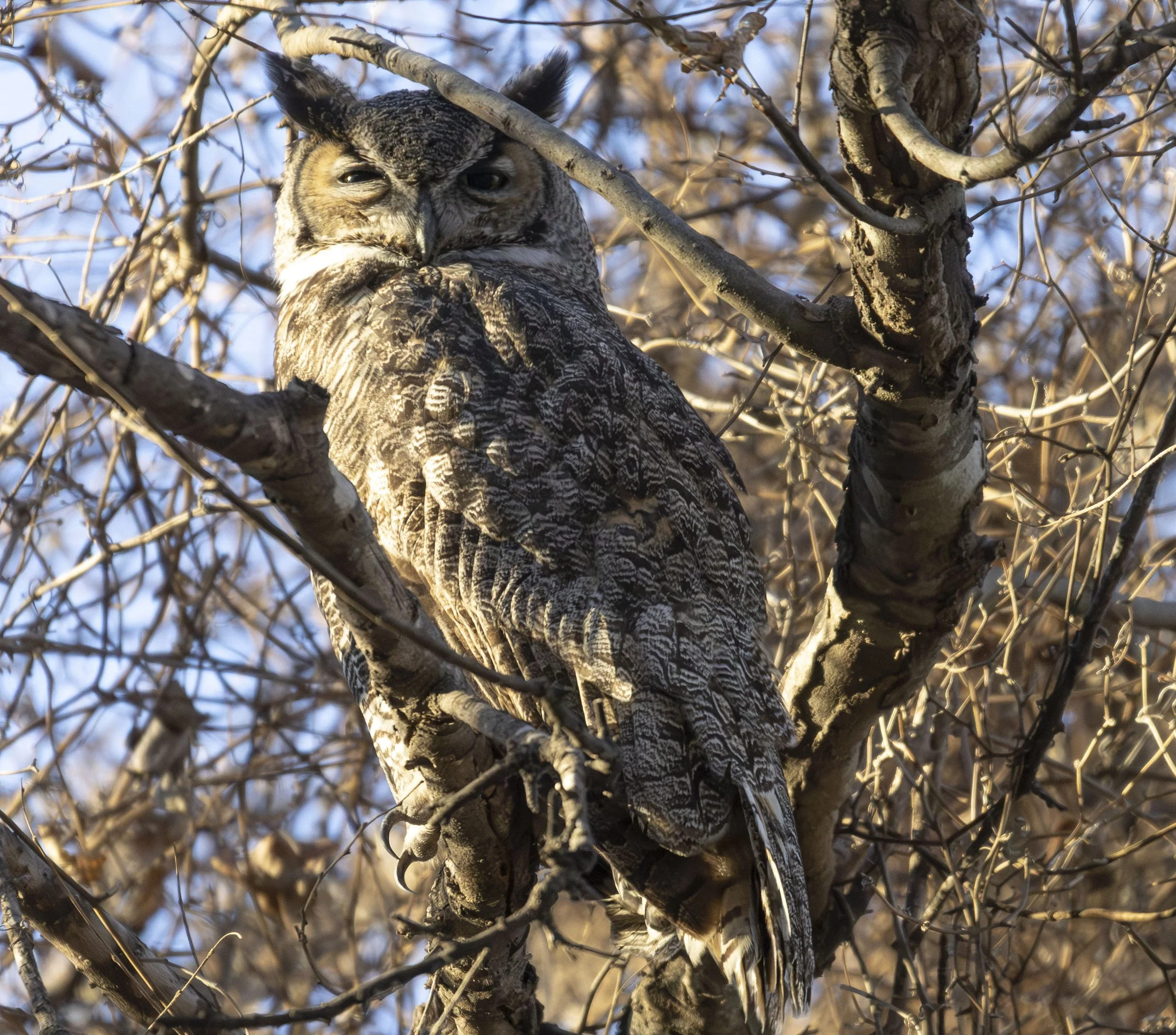
The assumed female, now semi-awake.
Imagine the cute, cranky babies they’ll make. So deadly and adorable.
Another interesting fact is they don’t build their own nests. They’re all about working smarter, not harder. They commandeer existing structures, most commonly the abandoned nests of red-tailed hawks or other critters. Even beyond the incubation period, the parents share parenting duties, with both adults fiercely defending their nest against any perceived threats.
Fun fact: Females are about 20 percent larger and heavier than males, so I may be right about the genders.
These two didn’t make a peep and I didn’t spot a nest, so I don’t think we have any owlets on the way just yet. But I’ll keep an eye on their progress. Fingers crossed we’ll have owlets soon so they have plenty of time to fledge by spring.
