
Baby Rodents of Unusual Size
FIELD NOTES
February 8, 2026—Kerrville, Texas
I’ve got the nutria family’s number now. The area around the river is covered in cute little paw prints, which I initially tried following to locate the nutria mom and pup I’ve seen twice now. Of course, I’m no tracker and the tracks are everywhere. For all I know, there are hoards of nutria hiding in the canes. Or raccoons running amuck.
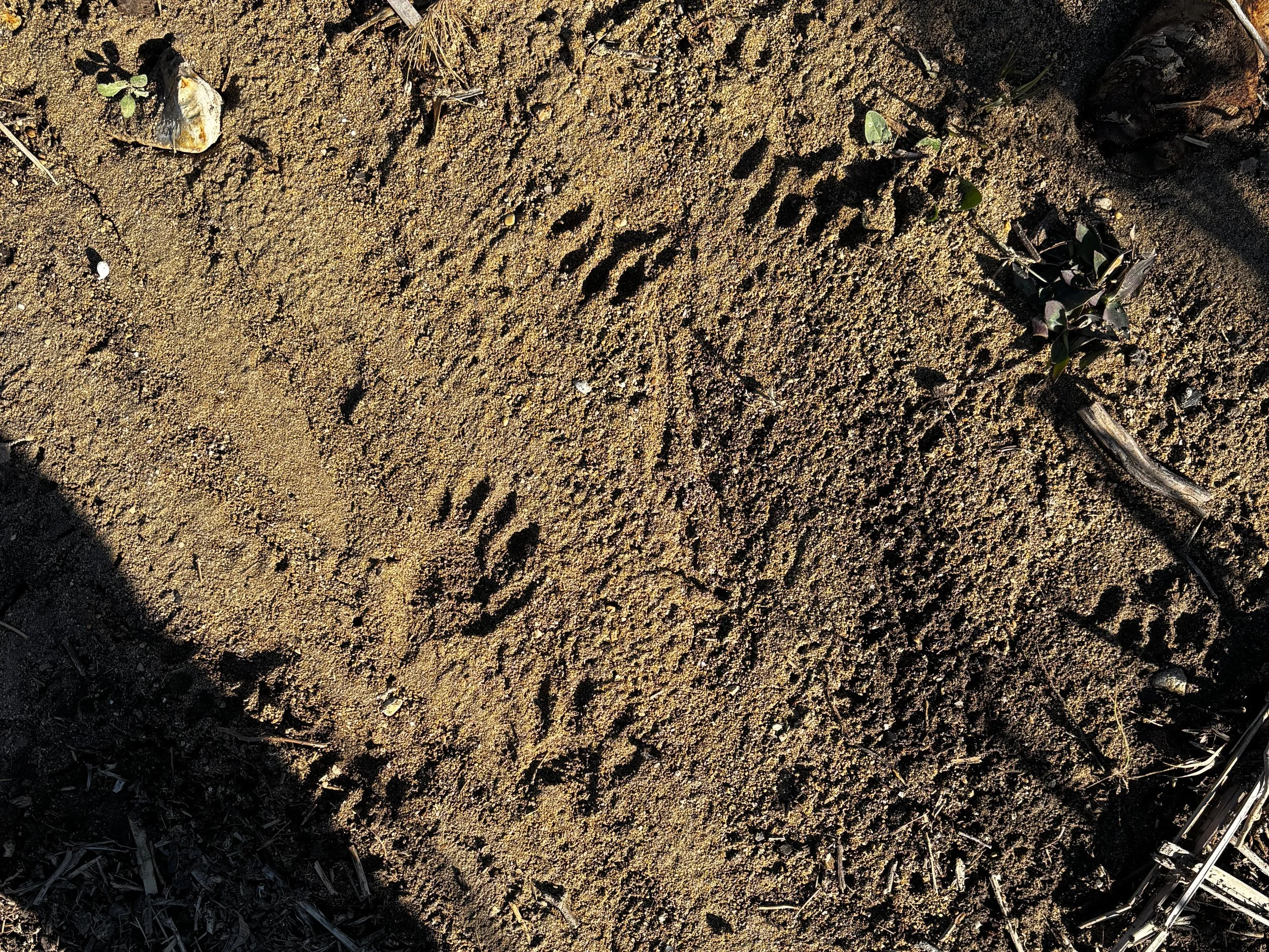
Critter Tracks
I initially assumed these were nutria tracks but later wondered if they were raccoon, or some third option I haven’t considered.
Even with my poor tracking skills, I found them again. Or, I should say, I found two pups! Adorably small—despite being way bigger than a rat or the series of pet hamsters I had as a kid—and sans Mom, they were soaking and swimming in a pool near the same location as the last sighting.
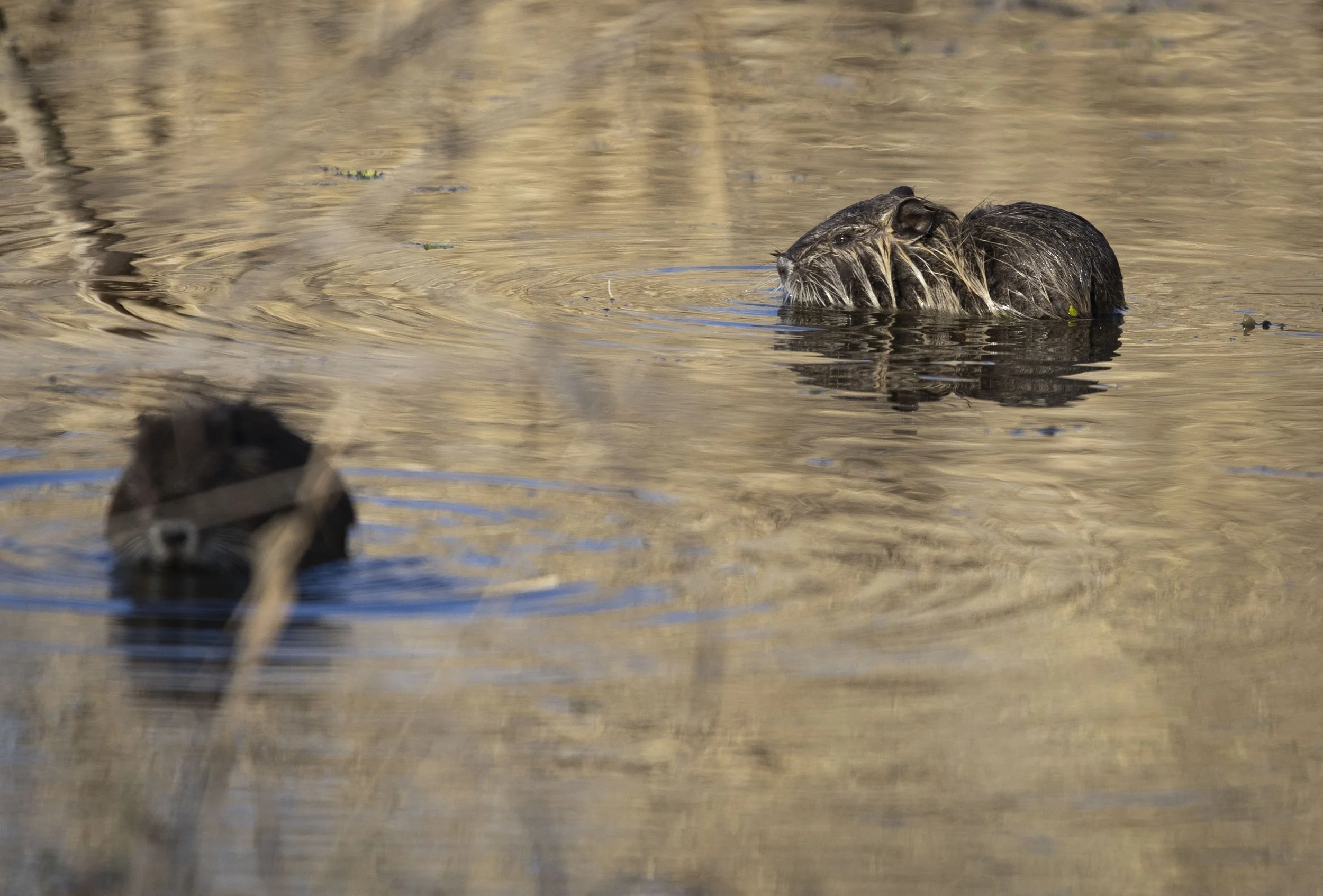
Nutria pups, each roughly the size of a guinea pig, enjoy a soak Saturday afternoon.
Here’s what I figured out: If it’s quiet, I can hear them. There are other critters that make the cane rustle but when it’s a nutria, I can hear those beaver teeth at work. I heard it again yesterday and tip-toed down the hillside for a closer look. The ground is still wet enough from recent rains, I can be decently sneaky. What a nightmare it is trying to quietly get closer over a thick layer of dry leaves and acorn husks. Or worse, with a cold that causes sudden coughing attacks. :)
But damp soil is perfection.
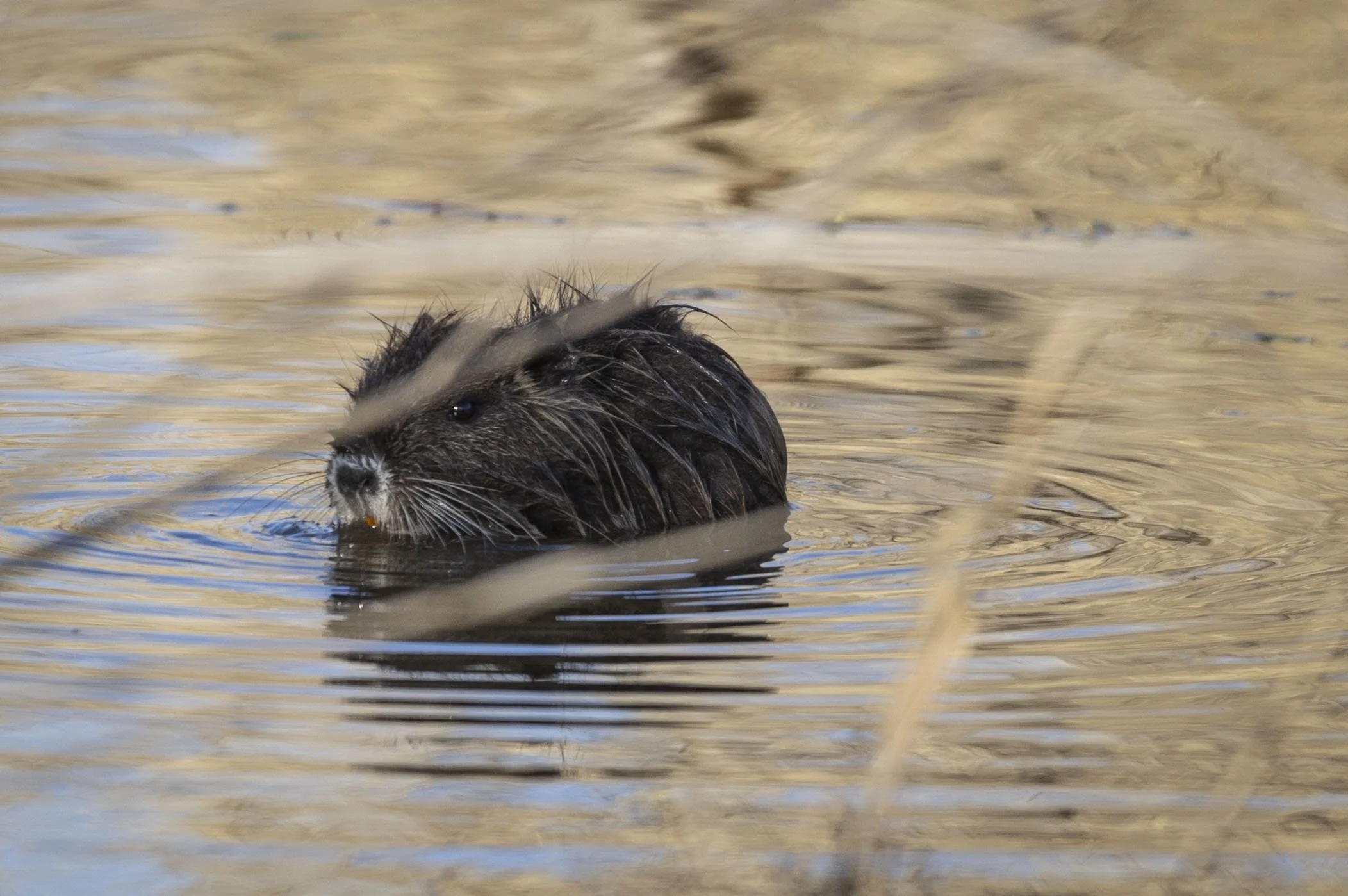
Nutria Pup No. 1
Signature orange beaver teeth just visible, this one stayed in the shadows.
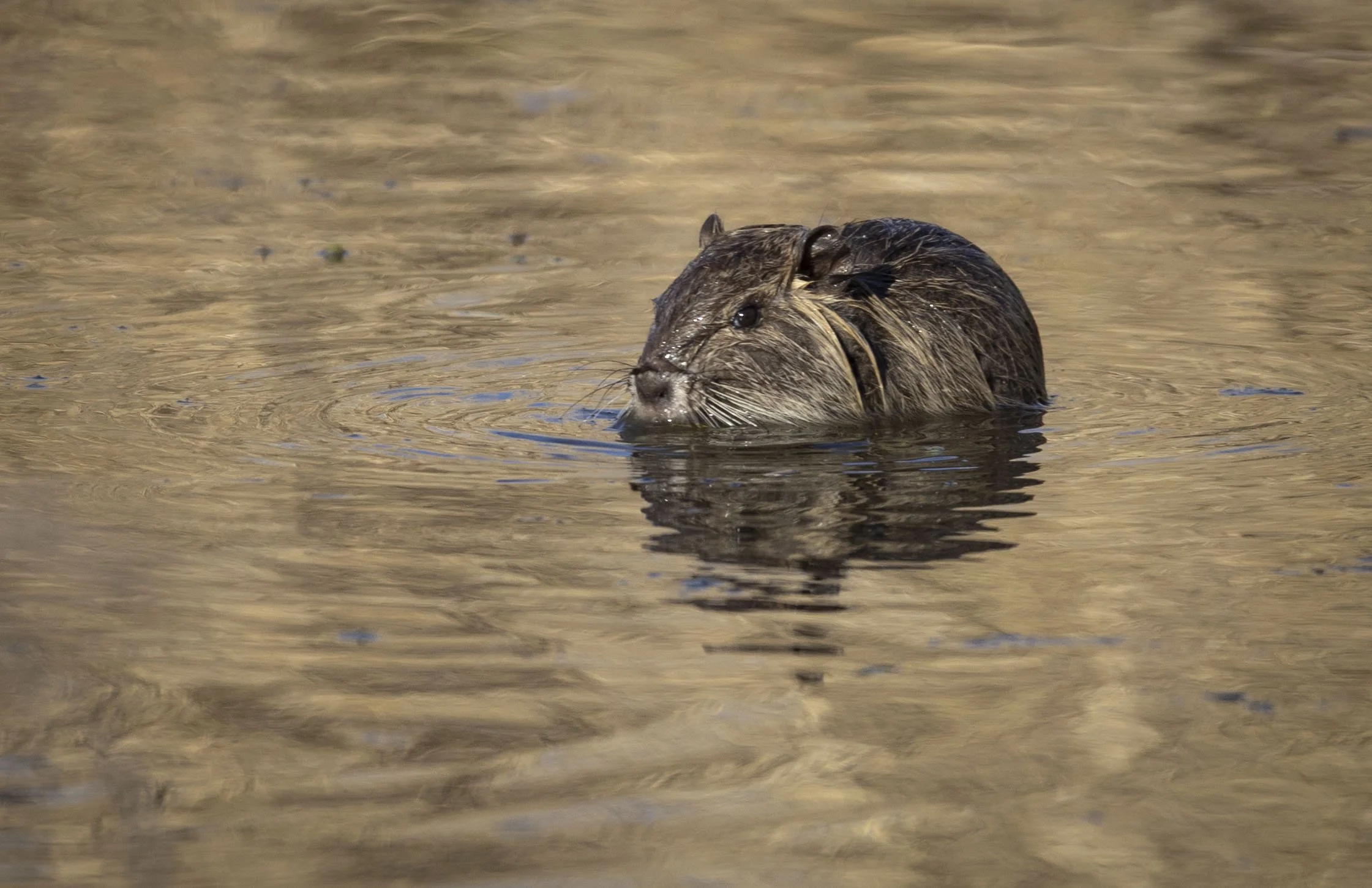
Nutria Pup No. 2
A little more adventurous, this one soaked and floated in the sun.
I did a little more research after noticing the long whiskers. Like cat whiskers, nutria whiskers (vibrissae) are very sensitive. Roughly 4-inches long, they serve as tactile sensors that help the semiaquatic nutria detect obstacles, find food, and sense movement.
The cute little hippo ears are set high on the head to help them hear when partially immersed in water, while their small size helps them stay streamlined and reduces water entry when they dive.
