
Love is in the air
FIELD NOTE
February 9, 2026—Kerrville, Texas
Cover the children’s eyes! It mating season for red-shouldered hawks and they’re active in public places. Initially, I wasn’t sure what I was seeing but all signs point to mating. And get this—they mate for life.
If you’ve noticed increased aerial displays and piercing “kee-aah” calls, there’s a reason for it. Red-shouldered hawks are in the midst of their mating season, which typically begins in late January and continues through March. February is peak activity time, which explains what I witnessed Sunday morning at Louise Hays Park. Goodness.
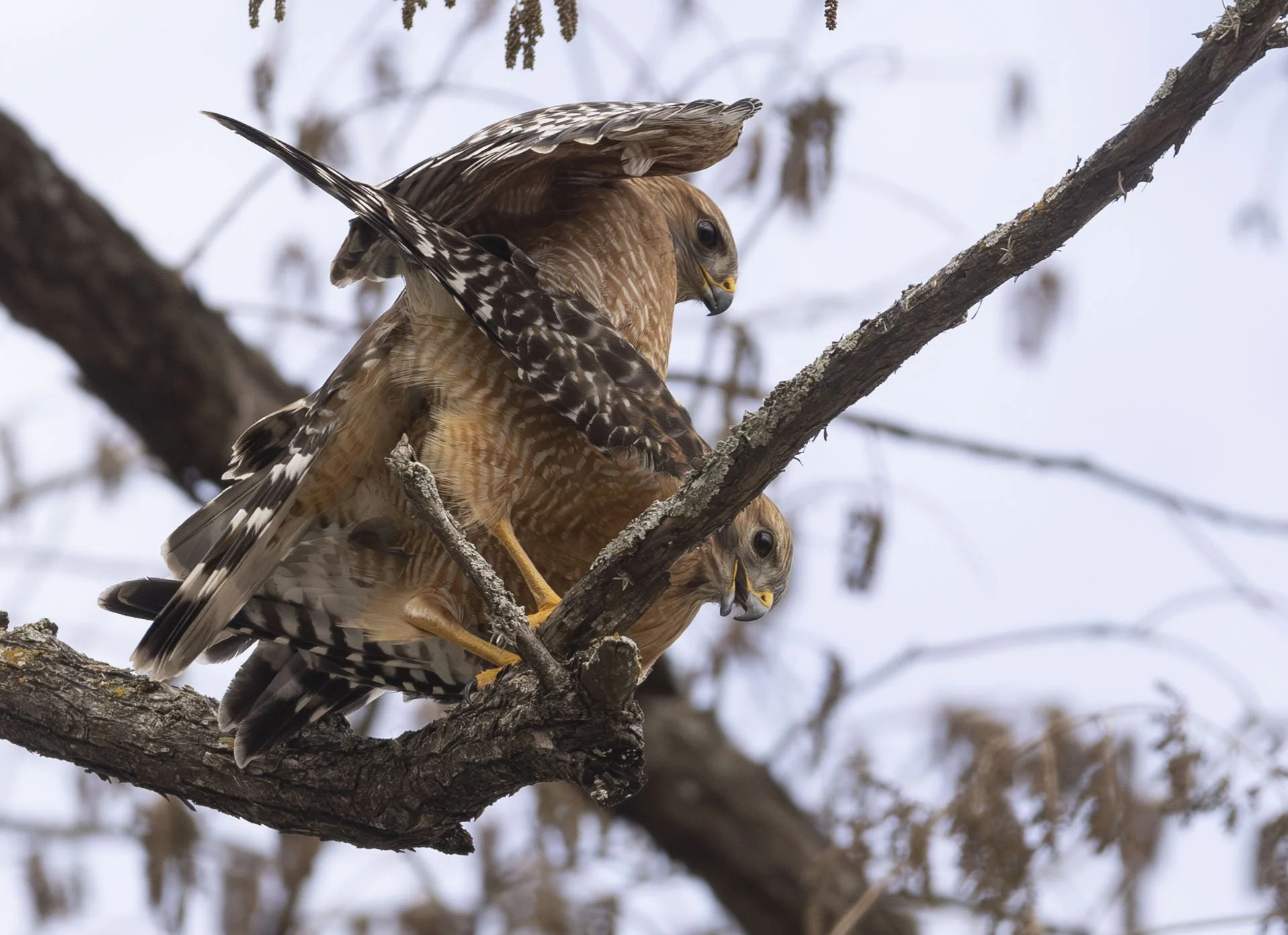
The pair doing the deed in an oak tree beside the river at Louise Hays Park.
Courtship usually starts with some aerial performances, sometimes in synchronized flights that serve to strengthen pair bonds. Red-shouldered hawks often mate for life and may use the same territory for decades. Looking back, I don’t recall if the pair were performing any aerial feats but I did notice something interesting. Some sources say the female often holds nesting materials during the act, since they’ll usually work together to build a nest. I noticed in my photos some evidence of this. The photo below was taken a few minutes before all the hubbub.
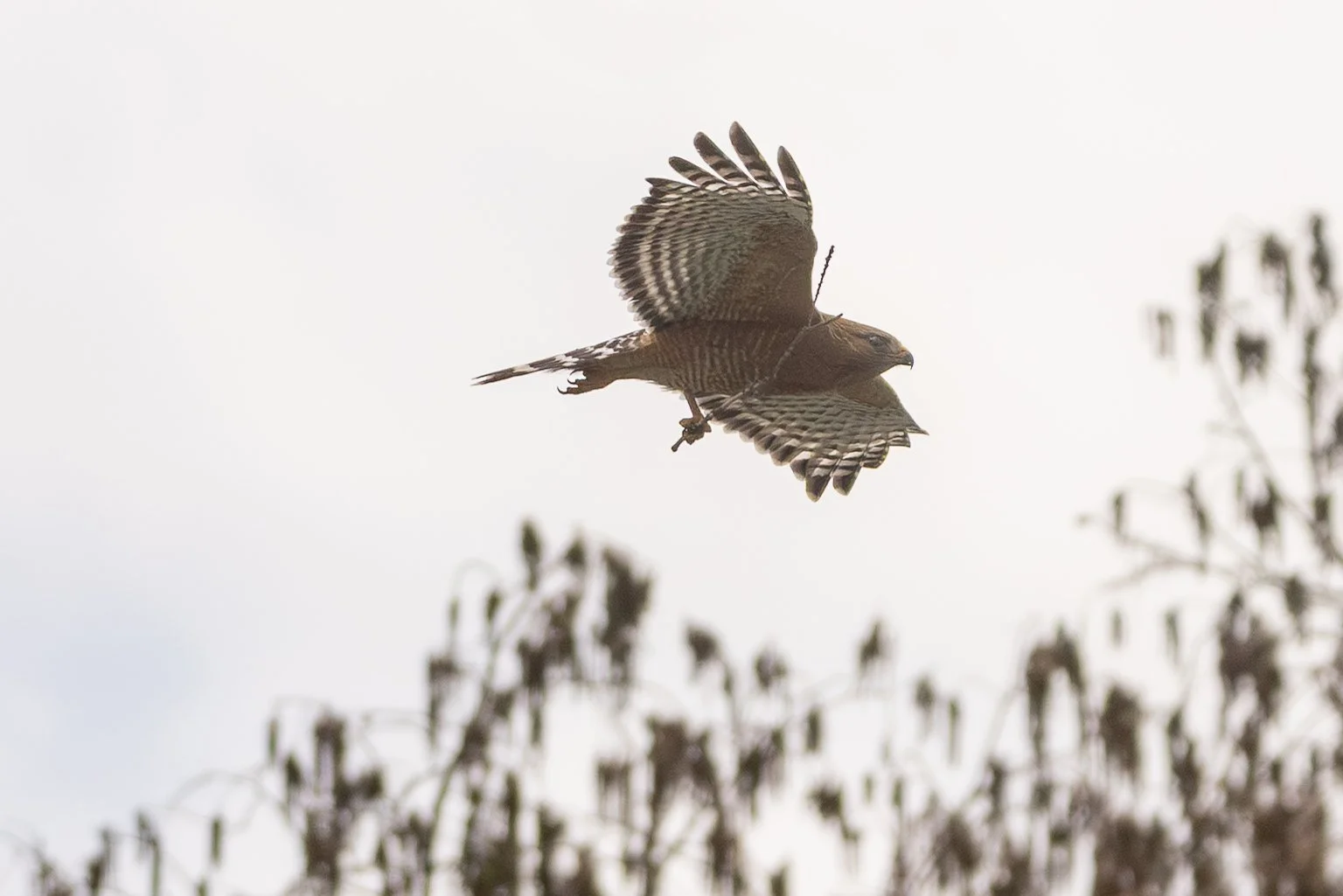
Based on the stick clutched in her grip, I’m guessing this is the female.
After witnessing the active couple, I had to look up how things actually work as far as, er, getting down to business. It didn’t last long and I wasn’t sure if I witnessed a fight or love-making. By the end, I was pretty sure it was mating.
Here’s how it works.
Like most birds, hawks mate through a brief act called a cloacal kiss. Neither male nor female hawks have external reproductive organs. Instead, both possess a cloaca, a single opening used for reproduction and waste elimination. During mating, the male balances on the female's back, both birds twist their tails aside, and their cloacas touch briefly to transfer sperm. The entire process lasts only a few seconds and may occur multiple times over several days to ensure fertilization.
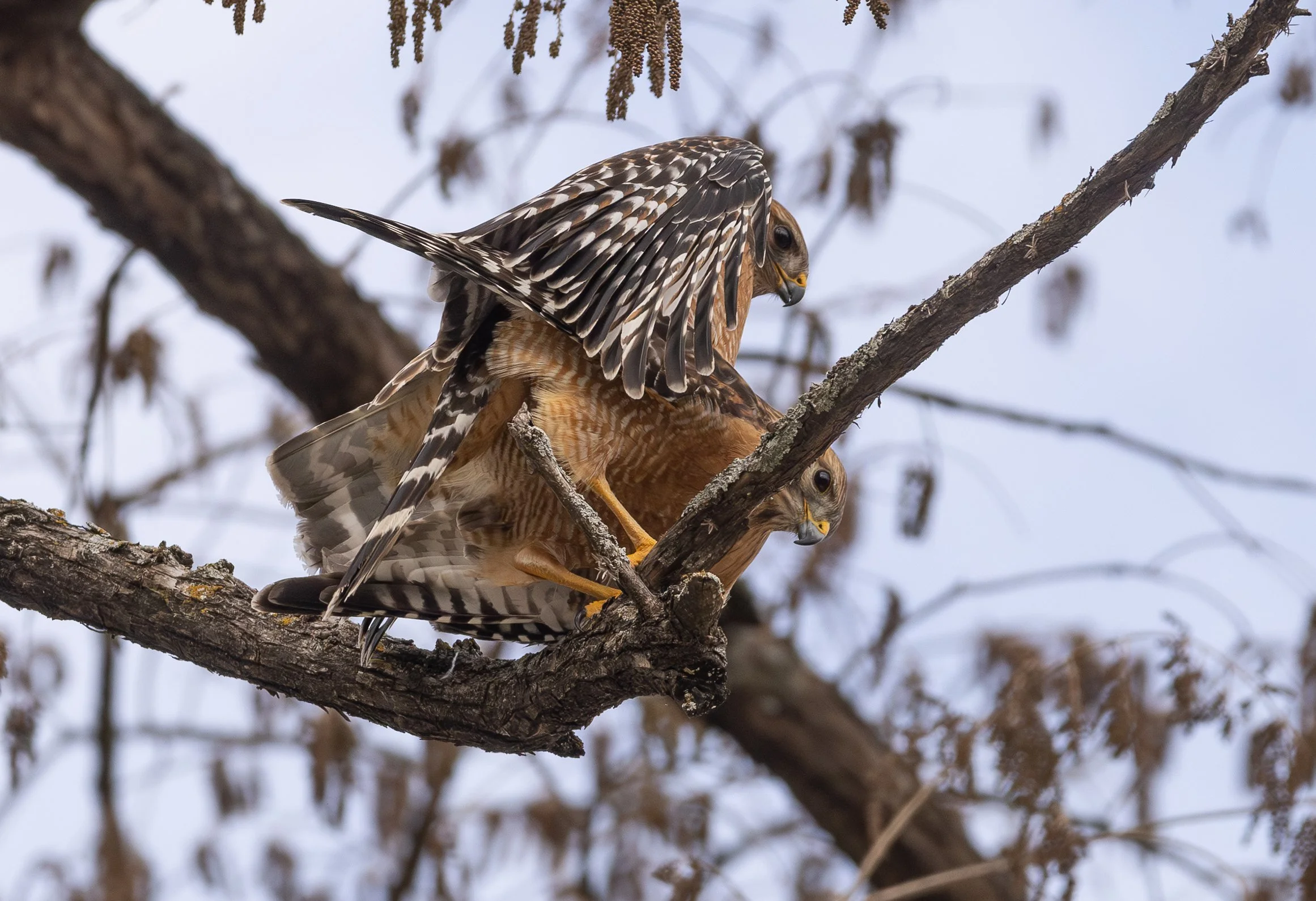
Could this be the moment? Are they bumping, uh, cloacas?
The pairs usually nest in sycamores or oaks near water. They either construct new nests or refurbish old ones. Females typically lay two to four eggs in March or April and they share incubation duties over approximately 33 days. Hooray for equal parenting duties. A baby hawk is called an eyas, a term used for the young nestlings that haven’t yet learned to fly.
My next mission: Find and photograph adorable, downy little eyas next month.
